The Department of

Cryptography

Cryptography is fundamental for security in the digital systems we rely on today. At the Department of Cryptography, we investigate the security of cryptographic algorithms from several aspects. Examples include the mathematical foundations of modern cryptography, the security of its physical implementations, or how its security will change in the quantum world. Our research helps keep Norway’s digital landscape secure in the future.
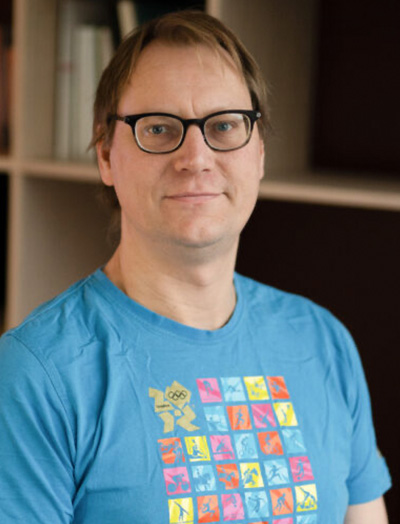
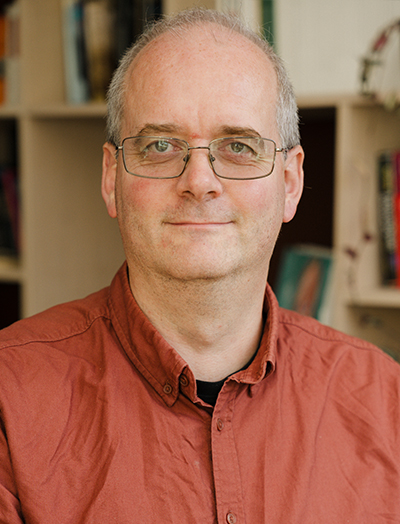
Martijn Stam

Head of the
Cryptography Department
Focus areas

Physical implementations of cryptography

Cryptography relies on secret keys being kept secret. Keys are stored in the devices that implement cryptographic algorithms, and are operated on during their executions. Fine-tuned measurements of power consumption or execution times, so-called side channels, may give information about the secret keys stored inside a device. Another attack vector is to inject controlled faults into the computations done on the device. If done cleverly, fault injection attacks can also reveal the secret keys inside. Both side channel analysis and fault injections are actively studied at the Department of Cryptography.

Trust in cryptographic algorithms

The cryptographic algorithms we use today are not mathematically proven to be secure. The trust we have in them comes from analysis by many independent experts who try to break them, and fail. It is important to continue cryptanalytic work, a task the department has contributed to since its inception. Cryptanalysis is particularly important for the post-quantum algorithms, as they are crucial for the digital security in the future and are based on less studied mathematical problems.

Privacy-preserving technologies

Whether you are a person or a business, being in control of your data is important. Fully homomorphic encryption schemes and multiparty computations are cryptographic technologies that allow partners to make use of their joint pool of data without sharing it with others and lose control over it. Real-world applications include privacy-preserving machine learning and biometric authentication systems where a person’s biometric data is not shared in plaintext with the authentication service. Ongoing research at the department studies how to solve these problems in efficient ways.

Our projects

Our projects explore cryptography and its applications in privacy, security and quantum technologies.

Partners


People

connected to the Cryptography department

Martijn Stam

Head of the Cryptography Department
Carlos Cid

Director, Simula UiB and QCNA

Håvard Raddum

Chief Research Scientist, Cryptography Department

Morten Øygarden

Adjunct Research Scientist

Aurélien Boeuf

Postdoctoral Fellow

Gowri R. Chandran

Postdoctoral Fellow

Hans Heum

Postdoctoral Fellow

Pabasara Athukorala

Postdoctoral Fellow

Atharva Phanse

PhD Student

Leandros de Jonge

PhD Student

Mohamed Abdelmonem

PhD Student

Sigurd Jordal

PhD Student

Research output

Publications

All Simula affiliated publications are now stored in The Norwegian Research Information Repository (NVA).

Simula UiB is a research center owned by Simula Research Laboratory and the University of Bergen.

Visiting address
Simula UiB
Merkantilen (3rd floor)
Thormøhlens gate 53D
5006 Bergen, Norway

bergen@simula.no

Simula UiB

Org. nr. 916 893 957

Funded by
Ministry of Education and Research
Ministry of Justice and Public Security
Ministry of Digitalisation and Public Governance
Research Council of Norway
Contract research

Reports and plans
ARP report for 2025 (Norwegian)
Simula Gender Equality Plan
Privacy and Data Protection

All rights reserved Simula UiB | Design and development by Limedrop